

Amman- 1 September 2014
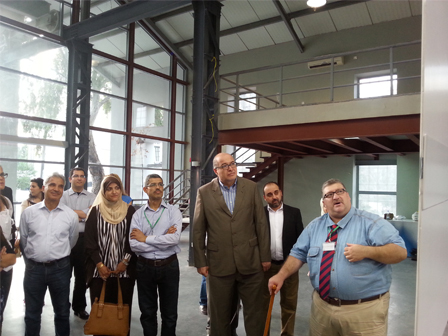 The school of Architecture and Built Environment (SABE) at the German Jordanian University (GJU)organized an exhibition about teaching architecture design and design methodology and pedagogy at 3rd year level at the university during the academic year 2013-2014.
The exhibition was held under the patronage of the dean of the SABE Dr. Mohammad Yaghan, at the Amman Electricity Hangar at Ras el Ain, and is curated by Dr. Rami Farouk Daher and a group of students from the GJU.
The exhibition based on revisiting Modernity as interplay between theory, pedagogy, and practice. Revisiting Modernity is a studio base teaching experiment conducted to setup an example for linking theory to design. The theoretical framework for this endeavor was based upon assumption that Modern Architecture is an incomplete program that can inform us today with lessons and values for valid for further consideration in the light of the current situation.
Dr. Rami Daher, elaborated that the design methodology adopted for this experimental architecture design studio, during its first half, addressed the meaning and essence of modernity as a major project of culture change encompassing ideological, territorial and socio-economic transformation that Europe had gone through at the turn of the 2oth century with subsequent filtrations into the Arab world several decades later; while understanding its potential effect on the teaching of architecture design today.
There were 4 design exercises all through the year , exercise 1 Revisiting Buildings of Modernity, exercise 3 Design of a place of Production while Exploring Contemporary Architecture Genre, exercise 4 Adapting Amman’s Heritage of Modernity : Adaptive Reuse as Contemporary Intervention, and exercise 2 Design of a Housing Project while Exploring Notions of “Dwelling” and Modernity’s Narratives of “ Housing” .
It is worthy to mention the teaching staff beginning with Dr.Rami Farouk Daher, Mohammad Khaled Zaghmouri , Amani Malhas, Tawfiq Abu Hantash, Rana Zureikat, and Angel Charkesian.