

Amman- 20 October, 2014
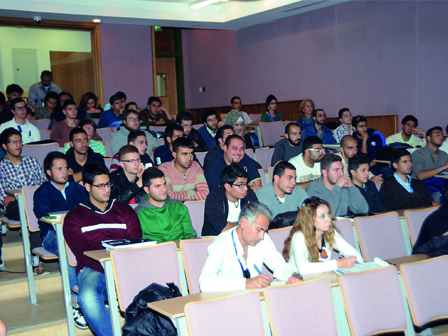 The Energy Engineering Department at GJU organized lecture entitled “Energy efficiency in Residential Buildings” on Monday, 20 October, 2014.
During the lecture Dr. Thomas Böning , Head of Consulting fields of water and energy technology gave a presentation of the results of pilot project as part of the funded projects by the German Government and the German Private Sector. He highlighted the most important topics of this context, energy-saving goal, energy Supply, energy efficiency commitment systems audits and energy management.
Energy efficiency or the rationalization of energy use has increasingly gained high importance during the last decades on global level. Results of relating studies and projects showed that by introducing energy efficiency measures, a significant amount of energy savings could be achieved.
This should contribute directly to the reduction of the depleting resources of primary energy, i.e. fossil fuels. In Jordan, the energy sector suffers immense losses in its all value chain stages. Beyond this, for being a fossil fuel importing country, Jordan has an urgent need to introduce such measures in power generating, distribution and consuming sectors to achieve the mentioned saving and hence reduce its energy bill.
It is worthy to mention that GJU is the first university in the country that introduced this topic to engineering students through its energy engineering study plan to prepare well-equipped energy engineers, who could work proactively to support the optimization of the energy sector in their country.
Dr. –Ing. Louy Qoaider, Head of Energy Engineering Department said that the Energy-Engineering Department in cooperation with the German INFA company and the Jordanian Jaar establishment is organizing two dissemination events to report practical experiences made in the framework of German-Jordanian PPP cooperation project aimed at introducing energy efficiency in Jordan among its teaching and research staff as well as its students. The two dissemination events are organized in two sequent weeks.