
Amman- 22 April, 2015
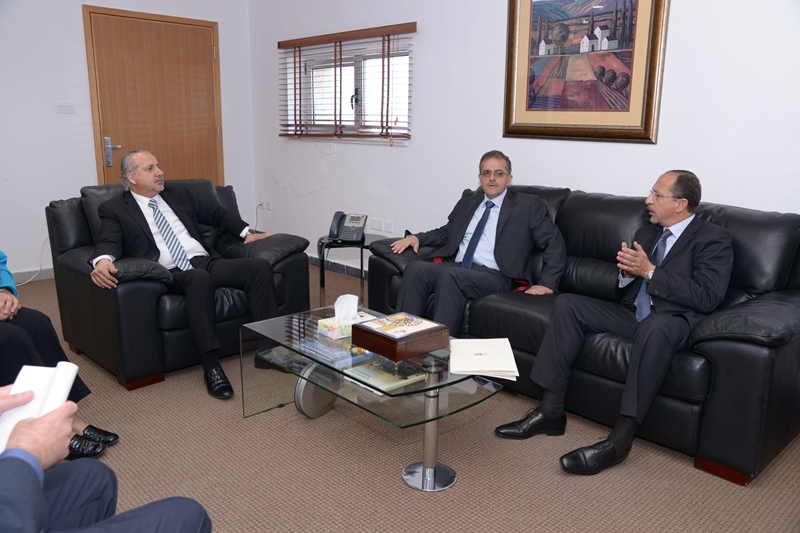
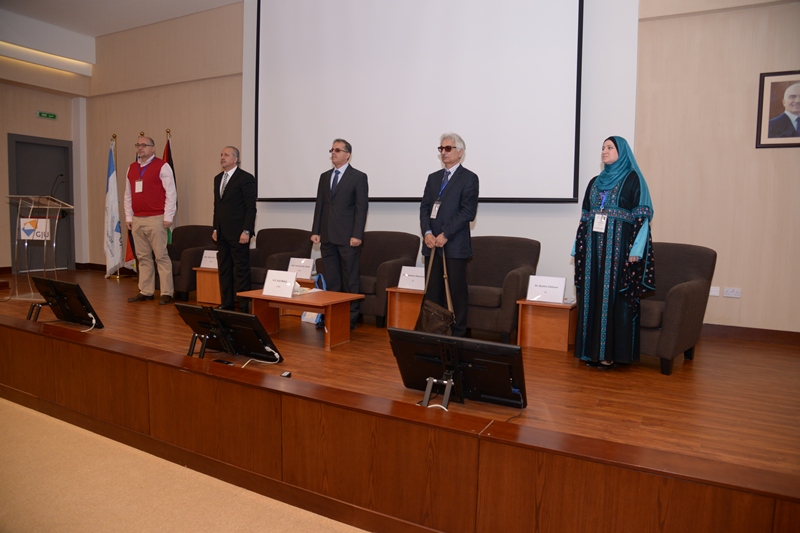
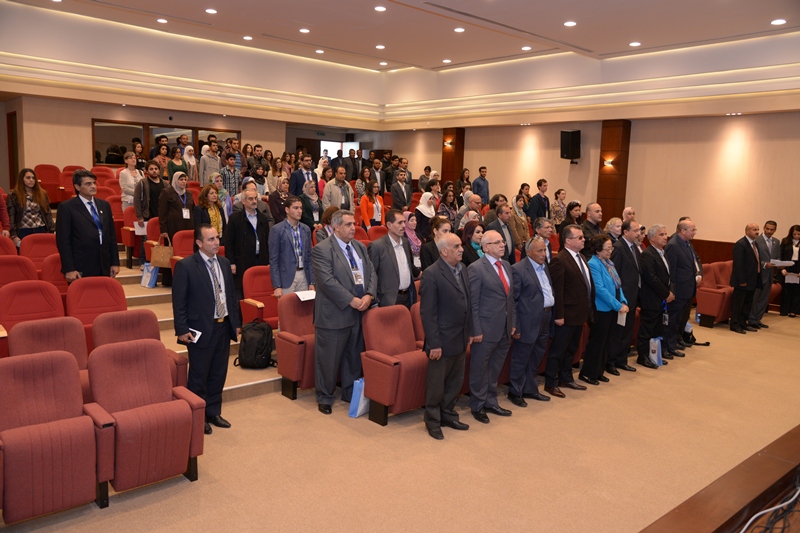
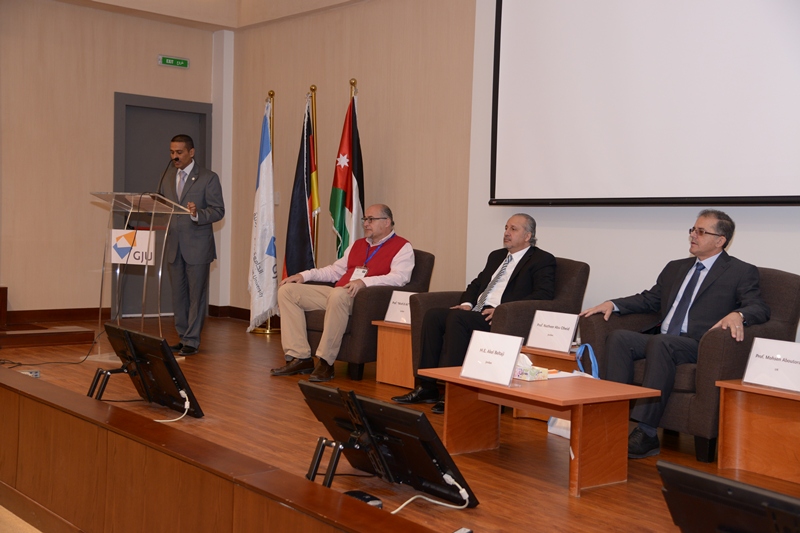
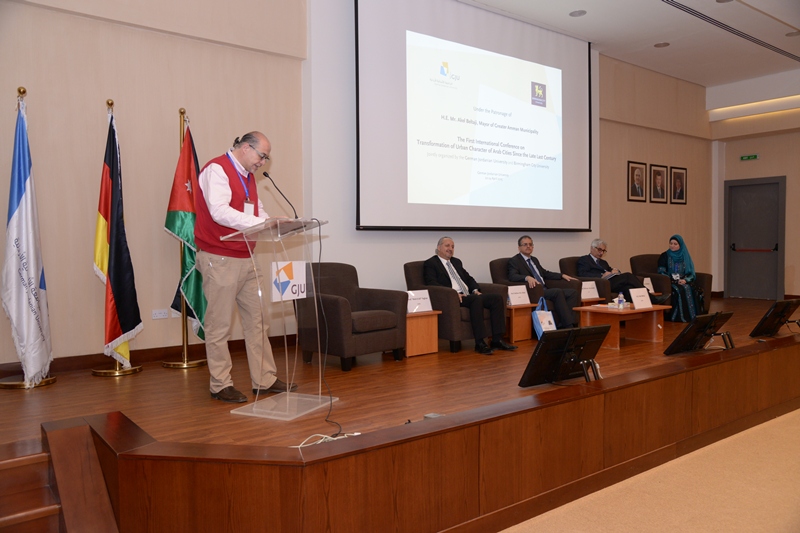
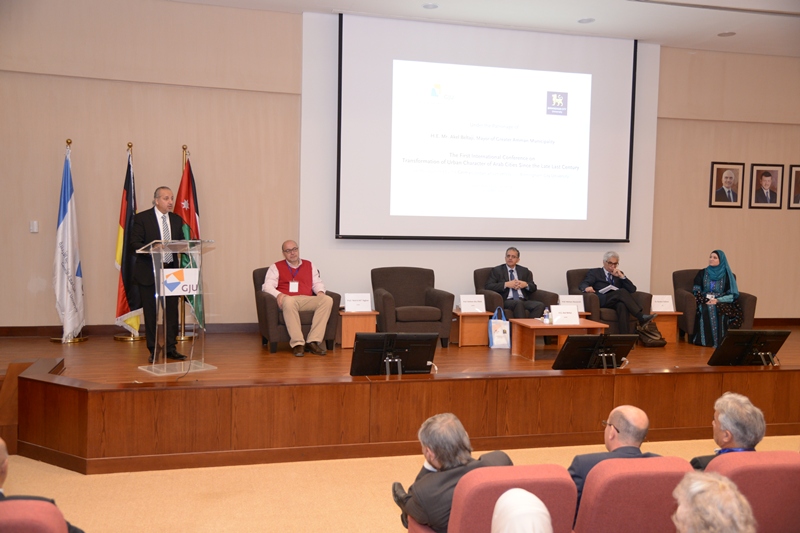
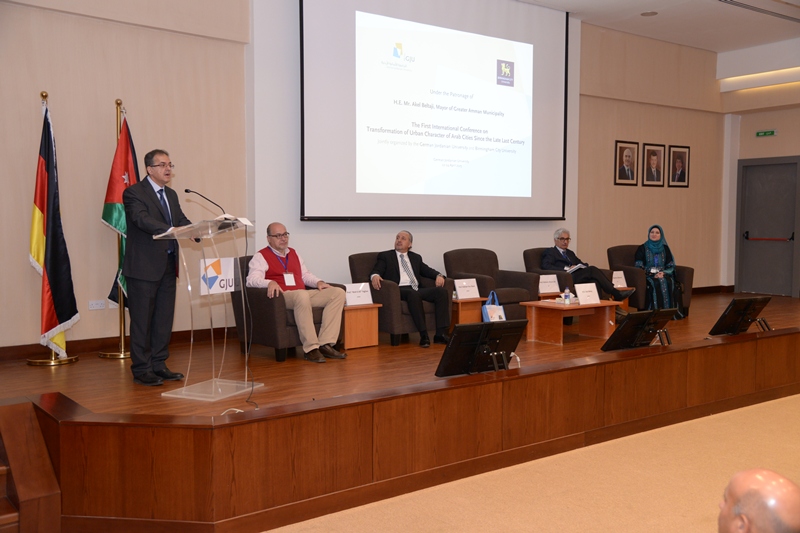
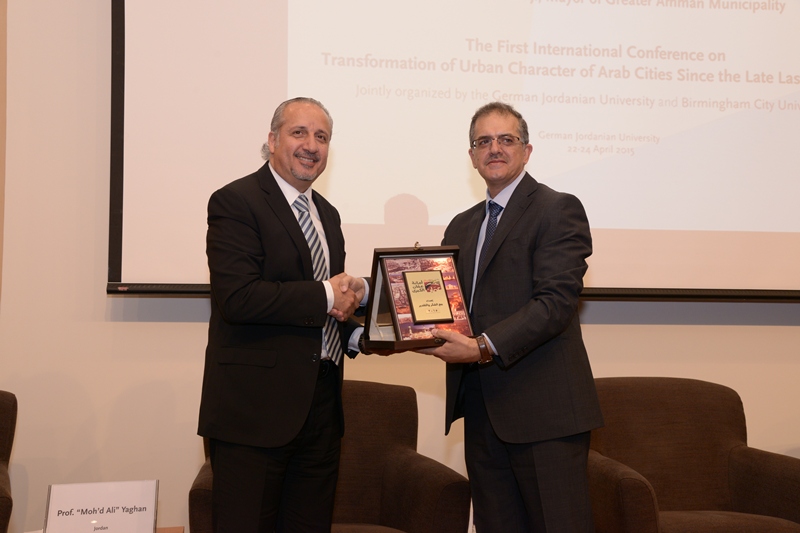
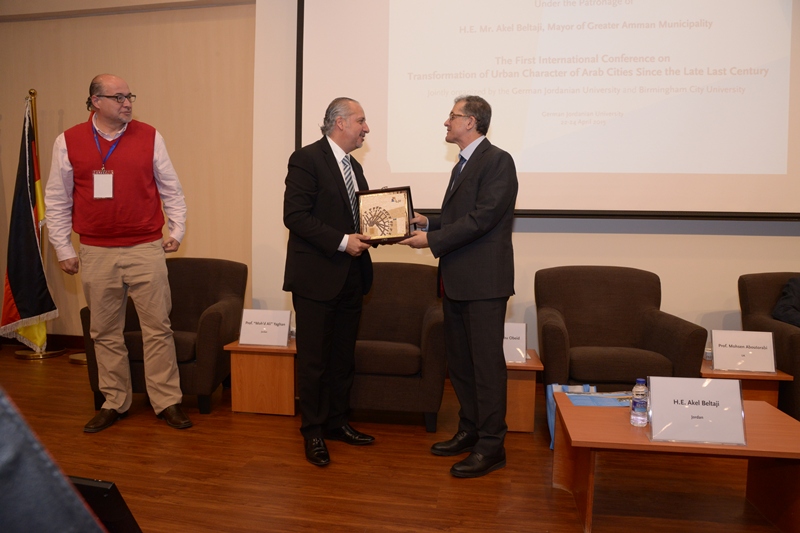
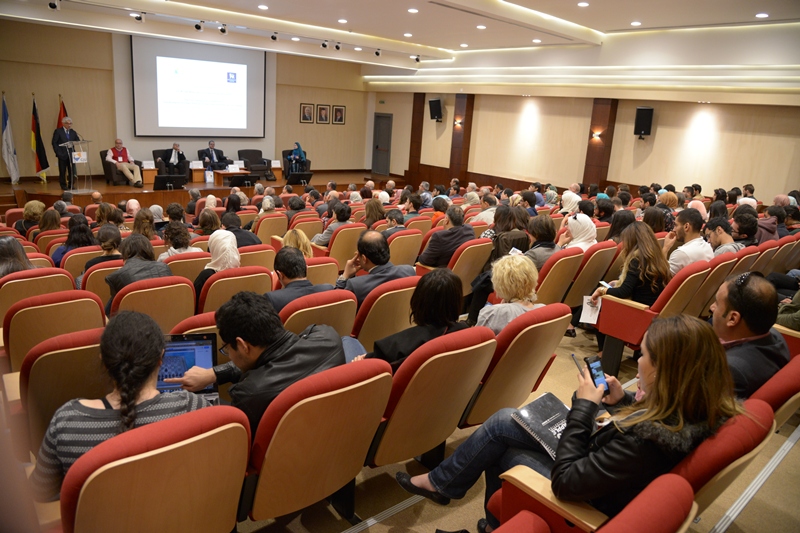
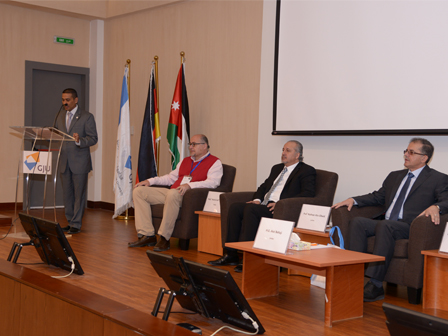 Under the patronage of H.E. Mr. Akel Beltaji, Mayor of Greater Amman Municipality, the German Jordanian University in coordination with Birmingham City University inaugurated the first International conference on the transformation of urban character of Arab cities since the late last century on Wednesday 22 of April, 2015.
The Conference, which will last for 3 days with the participation of 63 researchers from 6 countries Jordan, Egypt, Syria, Algeria, Britain and Germany; focuses on the transformation of urban character of Arab Cities since late 20th century. It is the premier forum to discuss the influence of the western modernist and global capitalism on city planning, urban design, architecture, urban landscape, and urban regeneration and how these factors have been transforming the traditional urban landscape of Arab cities. The conference encourages trans-disciplinary approaches from disciplines such as urban design and planning, urban geography, urban sociology, and urban history.
Eng. Fawzi Masad, City Manager at Greater Amman Municipality, said that the cultural identity is the result of the of human interaction with the surrounded environment, the time and place, it closely linked to the human ideology ,pointing out that there are several factors affect on the urban identity, economic, intellectual and political factors.
He further added that Amman plays an important political and economic role in the region, and that led to a change in the urban identity of the city through the multiple migrations, pointing out that Amman has been rated to 2010 as a global city within the 14 Arab cities according to the global urban studies.
The GJU President, Prof. Natheer Abu. Obeid, emphasized that this International Conference was held in the context of the social and cultural transformations, the globalization and the revolution of information technology that took place all over the world, pointing out that education, training and human development are major activities that require healthy competitive environments, with appropriate legal, administrative and political frameworks characterized by flexibility. Thus, new concepts have been introduced to the field of urban planning and development in order to find solutions to the new development problems.
The president also addressed the “knowledge cities” as a concept depends on knowledge entities known as “engines of innovations “, where the universities are a good example of such engines.
Prof. Mohsen Aboutorabi, Conference Principle, Birmingham City University , explained that this conference is aiming to develop a new narrative to form a new utopian thinking that can change the global sameness paradigm to colorful landscape of variety of cities through underscoring the urgent political priority of constructing cities that correspond to human social needs rather than to the capitalist imperative.