

The Montessori Method, developed by the Italian doctor and educator Maria Montessori, is designed to help children employ their senses and develop mentally, physically, and spiritually through specific educational tools. This system moves away from rote learning. Instead of focusing on academic instruction, the Montessori approach emphasizes respecting and encouraging individual differences for each child and providing an environment that nurtures social interaction and emotional skills. Due to its focus on early childhood development, the Montessori method is often applied at the preschool level.
I should mention a fundamental principle of Montessori: "External helps build internal order."
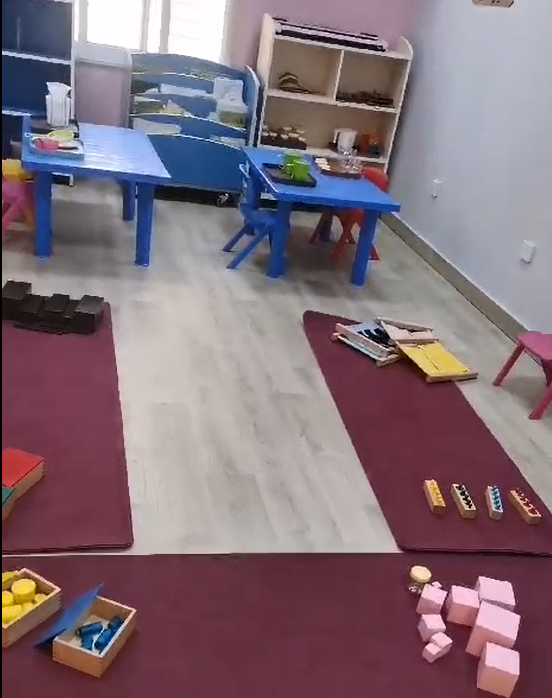
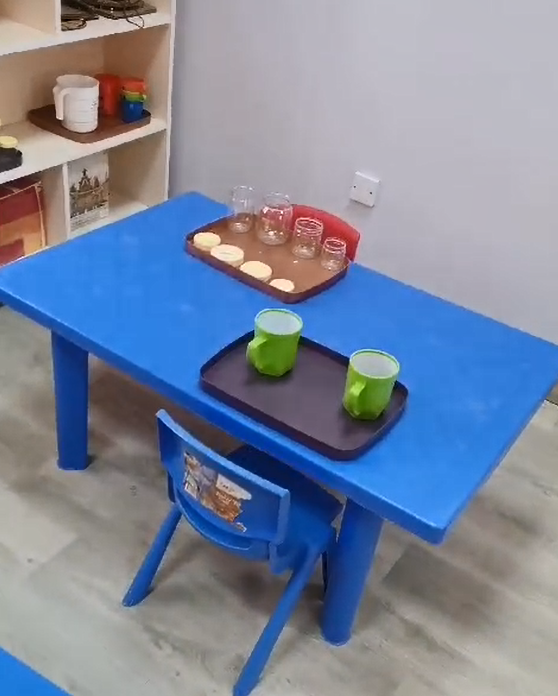
Principles of the Montessori Method:
-
Respect for the child
-
The absorbent mind
-
Sensitive periods
-
The prepared environment
-
Auto-education (self-directed learning)
- Life skills
- Self-care
- Care of the environment
- Social skills
-
Motor Skills: The child will learn to control their movements.
-
Cognitive Skills: The child will gain awareness of their environment.
-
Social Learning: The child will become more aware of socially acceptable behaviour.
-
Independence: The child will gradually gain independence.
-
Focus: The child will progressively enhance their concentration.
-
Discipline: The child will develop self-discipline.
-
The sensory materials provide opportunities for the child to use all five senses.
-
Activities are thoughtfully designed to guide the child one step forward, gradually building concepts.
-
Each piece of material has an error control, which fosters self-learning.
-
The child is allowed by the guide to explore the tools on their own freely.
-
Tools are introduced individually to maintain the child’s motivation.
-
The tools are organized and help the child think logically.
-
The tools enhance fine motor coordination.
-
The tools provide the child with experiential learning.
-
The senses are isolated, focusing on a specific sense to facilitate concentration.
-
The materials serve as indirect preparation for later reading, writing, mathematics, and science learning.