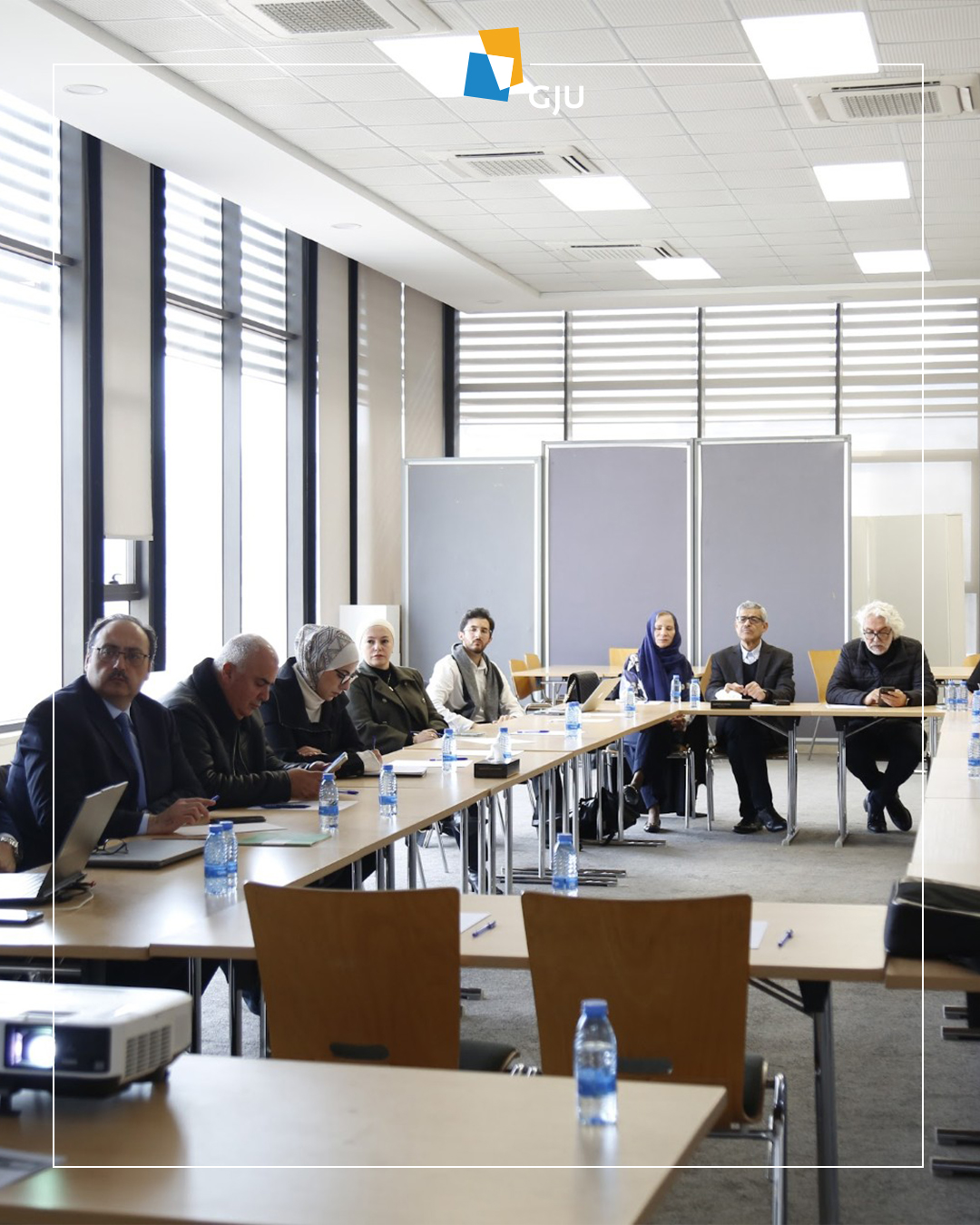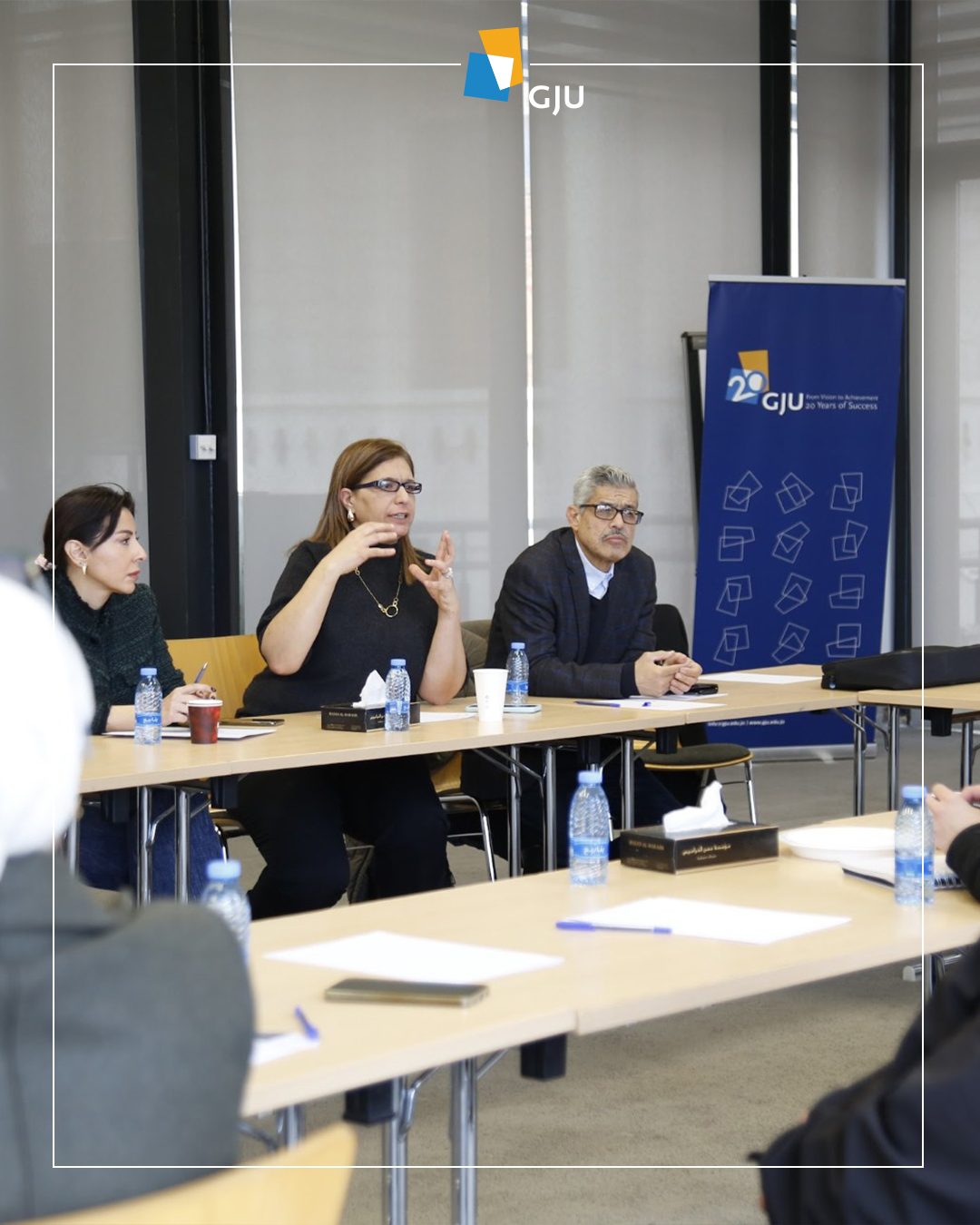

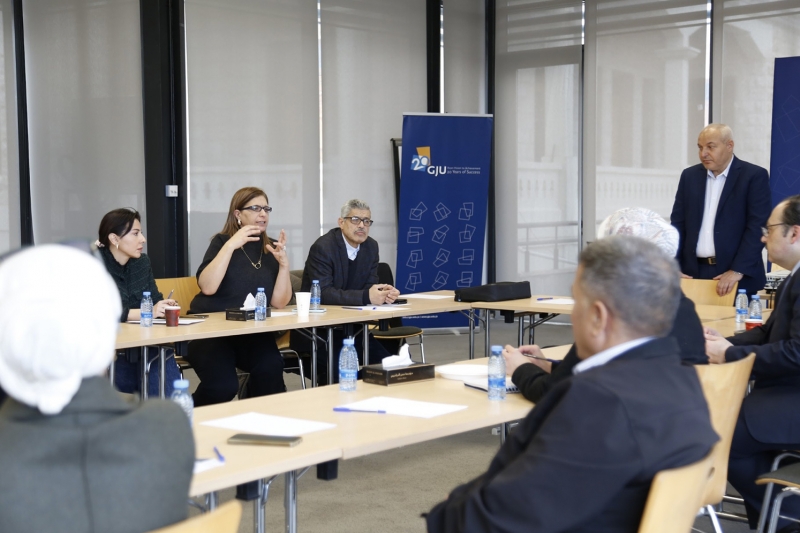
 The School of Architecture and Built Environment (SABE) at the German Jordanian University (GJU) and the University of Petra have collaboratively conducted the Local Networking Event within the Pro-GREEN-LABs project that aims at Promoting Green Competences for Integrated Sustainable Development in Architectural and planning Education.
The project is an Erasmus+ Capacity Building project co-funded by the European Union through the European Education and Culture Executive Agency (EACEA) and coordinated by Dr. Maram Tawil from GJU and Dr. Ali Maqousi from Petra University. The two universities constitute part of the partner network within this project along with the Bauhaus University Weimar, Politecninco de Milano, Chalmers University of Technology, Cairo University, Alexandria University and the Arab Academy, Alexandria.
The Local Network Events served as a platform to engage academic institutions, professionals, and stakeholders in discussions addressing key challenges in architectural education, particularly the gap between academic teaching and professional practice, the integration of technical and social knowledge, and the relationship between universities and local communities.
The deans of the schools of architecture in both universities, Dr. Omaimah Ali and Dr. Amer Jokhadar and several staff members form both universities, along with representatives from the Greater Amman Municipality, Vison Amman, Jordan Engineers Association, and Sanabel Landscape, have attended and participated in the discussion.
The event emphasized on the newly established curricula and innovative lab that correlates with sustainable education, climate-responsive urban development, and the incorporation of real-world environmental and societal challenges into architectural and planning curricula.
Pro-GREEN-LABs promote an integrated understanding of sustainability that bridges environmental, social, and economic dimensions, while responding to local climatic conditions, community needs, and regional development priorities. By equipping students and educators with essential green competences encompassing knowledge, skills, attitudes, and professional practices.
The project contributes to long-term capacity building for sustainable urban development in the region.