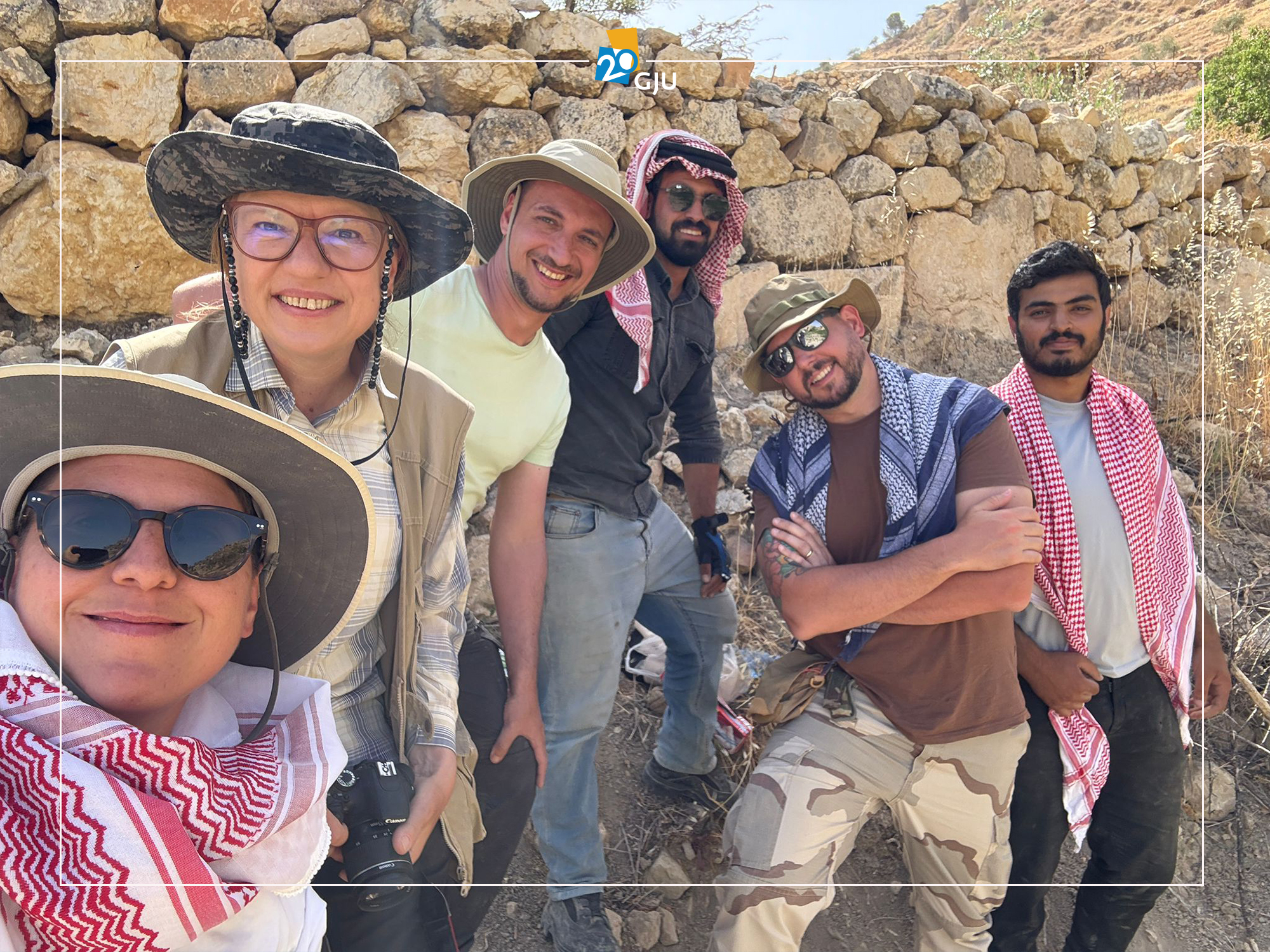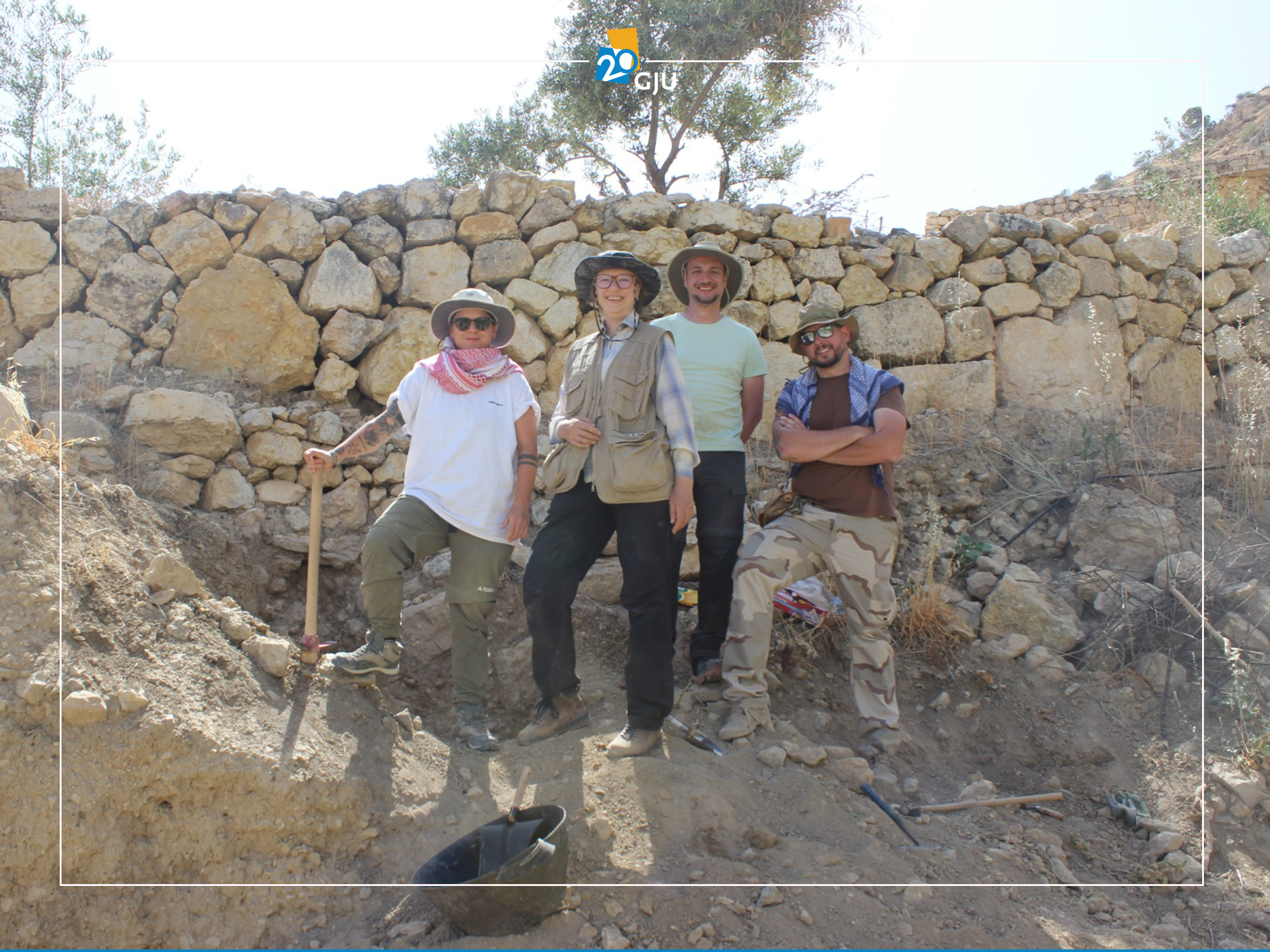

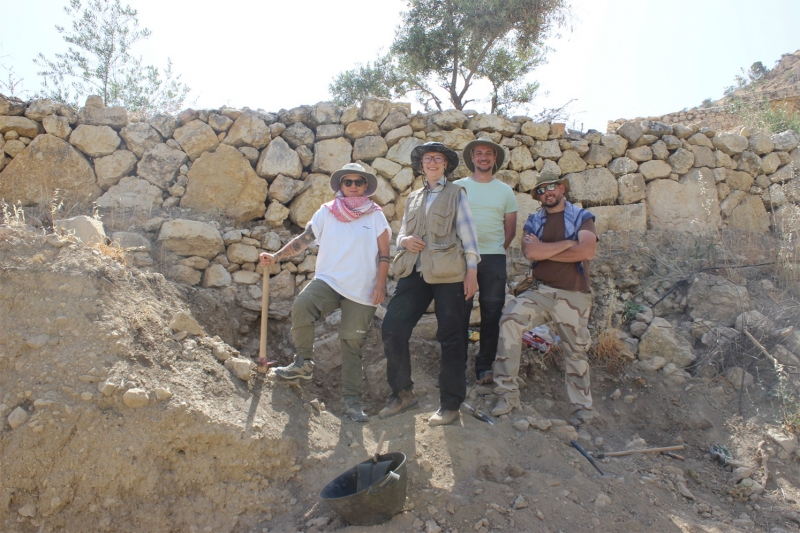
A joint research team from the Center for the Study of Natural and Cultural Heritage (CSNACH) at the German Jordanian University (GJU) and the Islamic Archaeology Research Unit at Friedrich-Wilhelms-Universität Bonn - Germany carried out a field study in the Wadi Hisban–Naour area, in cooperation with the Department of Antiquities of Jordan and with the support of the local community in the village of Mushaqqar.
The study, conducted from May 18 to 29, 2025, is part of a project funded by the German Research Foundation (DFG), under the supervision of Prof. Bethany Walker, and led by Dr. Catreena Hamarneh from GJU. The interdisciplinary team included experts from Germany and Jordan in geology, soil science, archaeology, and digital documentation, with active participation from the local community.
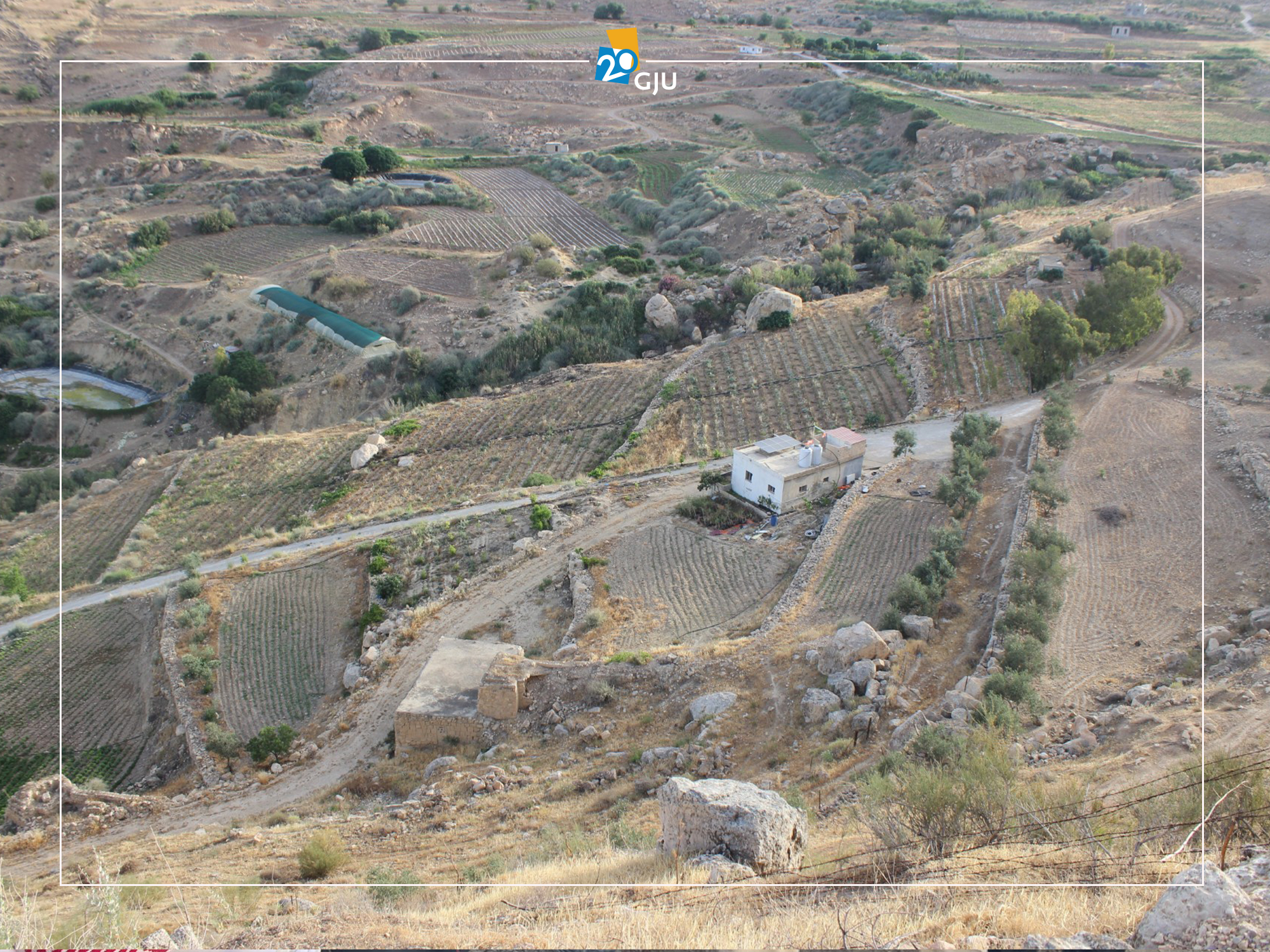
The research covered approximately 62 hectares of rugged terrain, including natural springs, ancient agricultural terraces, hilltops, and narrow valleys. The area is rich in archaeological remains spanning from the Roman to the Ottoman periods, including three historic mills dating to the Mamluk and Ottoman eras located within the valley.
The study focused on soil analysis in several agricultural terraces to understand the history of cultivation in the Tall Hisban area. Researchers analyzed soil composition and nutrient content, and searched for ancient plant remains to reconstruct past agricultural practices and climate variations. The team also aims to date these human interventions using Optically Stimulated Luminescence (OSL) technology.
Laboratory analysis of collected samples will continue at the German Jordanian University, the University of Bonn (Germany), and the Universitat Autònoma de Barcelona (Spain). The project results are expected to be published in 2026.