
 The German Jordanian University (GJU) continues to strengthen its position as a leader in applied, internationally connected architectural education through active collaboration with German academic institutions. In line with this mission, a group of six students from the School of Architecture and Built Environment (SABE)—four bachelor’s students and two master’s students—traveled to Germany to participate in a specialized urban design workshop hosted at RWTH Aachen University and led by Dr. Maram Al-Tawil. Conducted under the framework of the DAAD-funded Ta’ziz Program 2025, the workshop represented the second phase of a joint initiative between SABE and RWTH Aachen, building on the successful first phase held earlier this semester at the SABE Jabal Amman Campus.
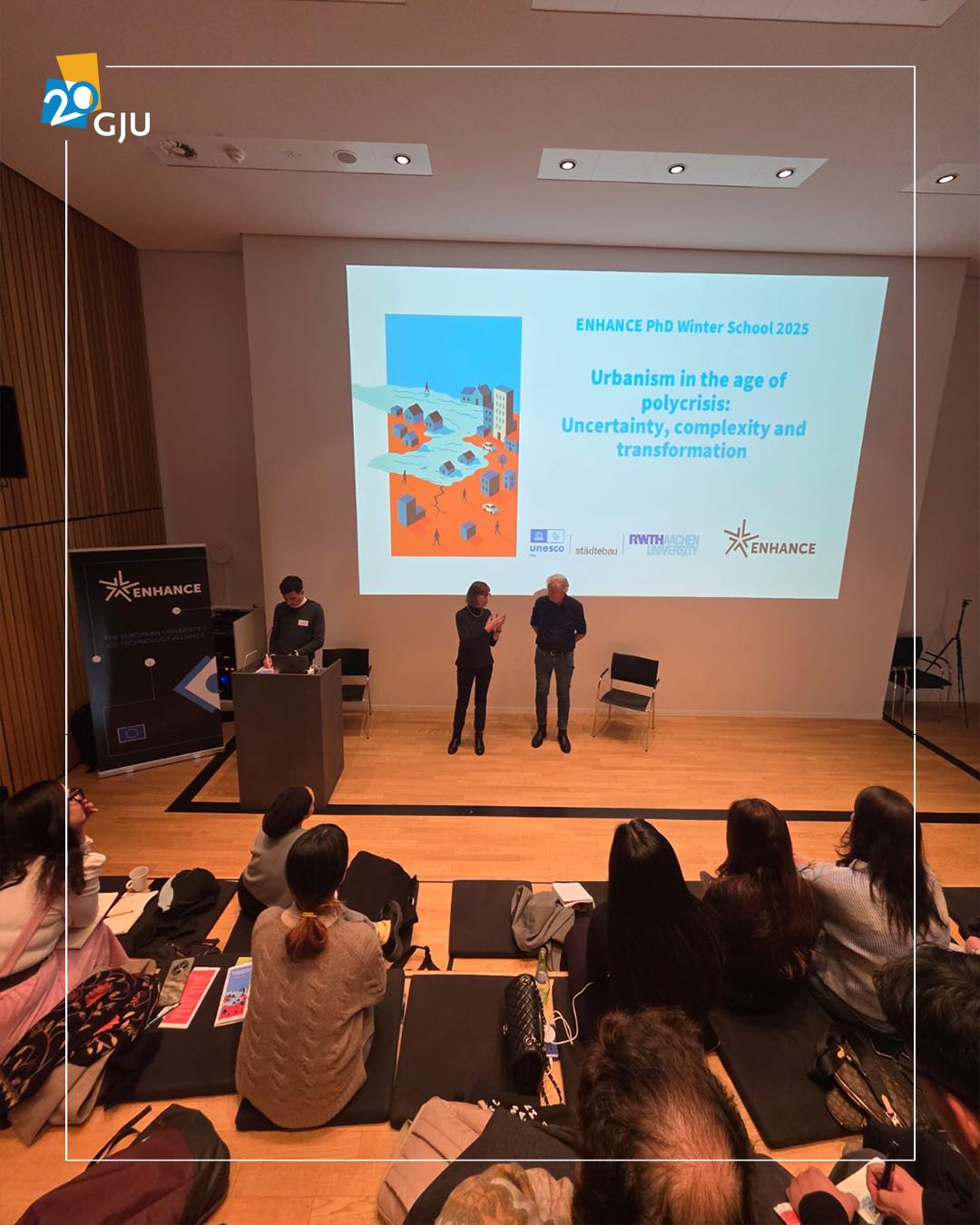
The symposium session was formally opened by Prof. Christa Reicher, Chair of Urban Design and Head of the Institute for Urban Design and European Urbanism at RWTH Aachen University, alongside representatives from the Faculty of Architecture and the RWTH Aachen International Office, including Dr. Henriette Finsterbusch and Vice Dean Anne Julchen Bernhardt. The academic program commenced with a keynote lecture by Prof. Reicher entitled “Urbanism in the Age of Polycrisis: Uncertainty, Complexity, and Transformation,” followed by a lecture by Prof. Frank Piller titled “How Sustainability, Digital Transformation, and Open Ecosystems Redefine Innovation.” Further insights were shared by Erik Pasveer, who addressed contemporary design approaches in the development of the city of Amsterdam. These contributions provided SABE students with valuable academic exposure and fostered meaningful interaction within intercultural working groups.
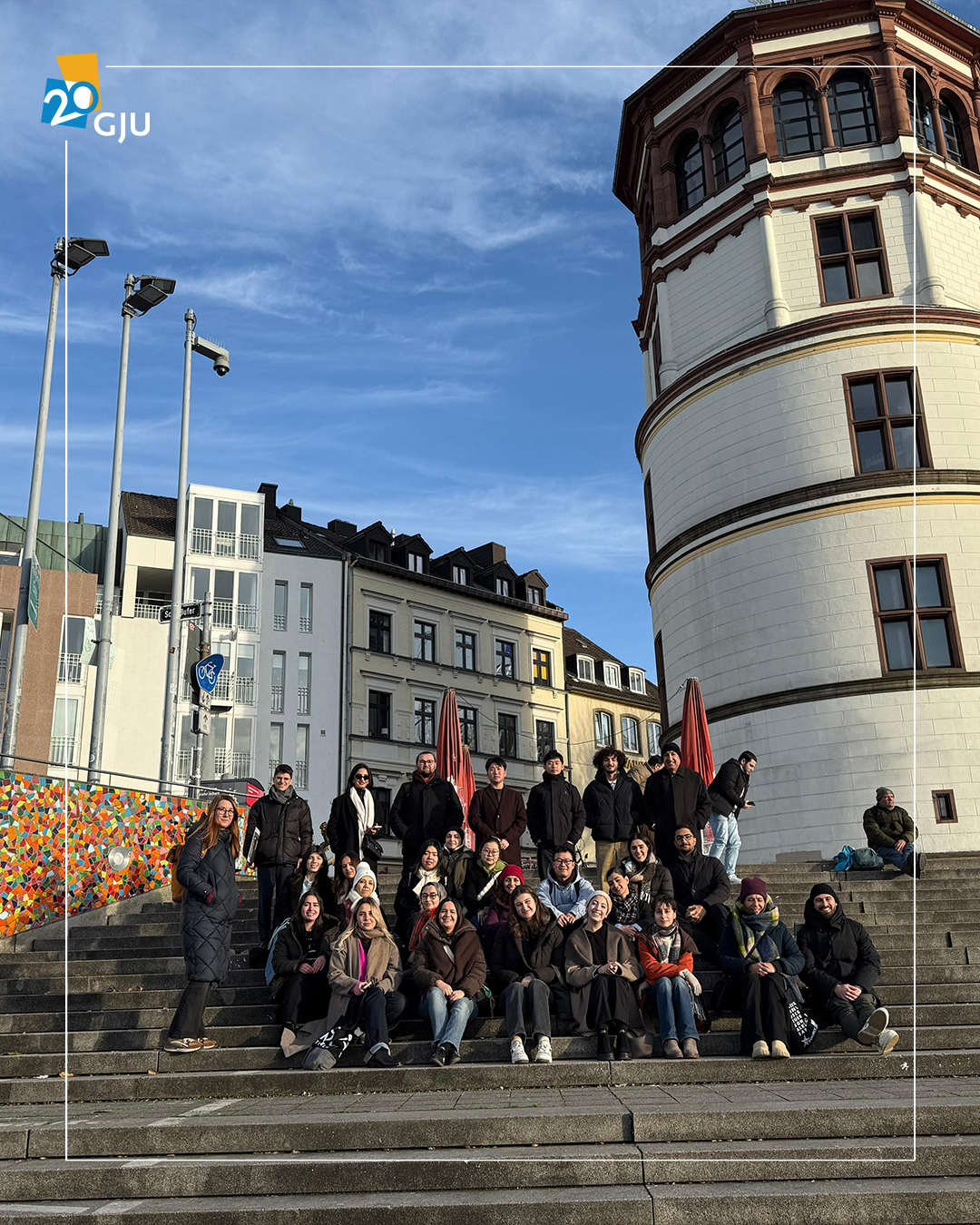
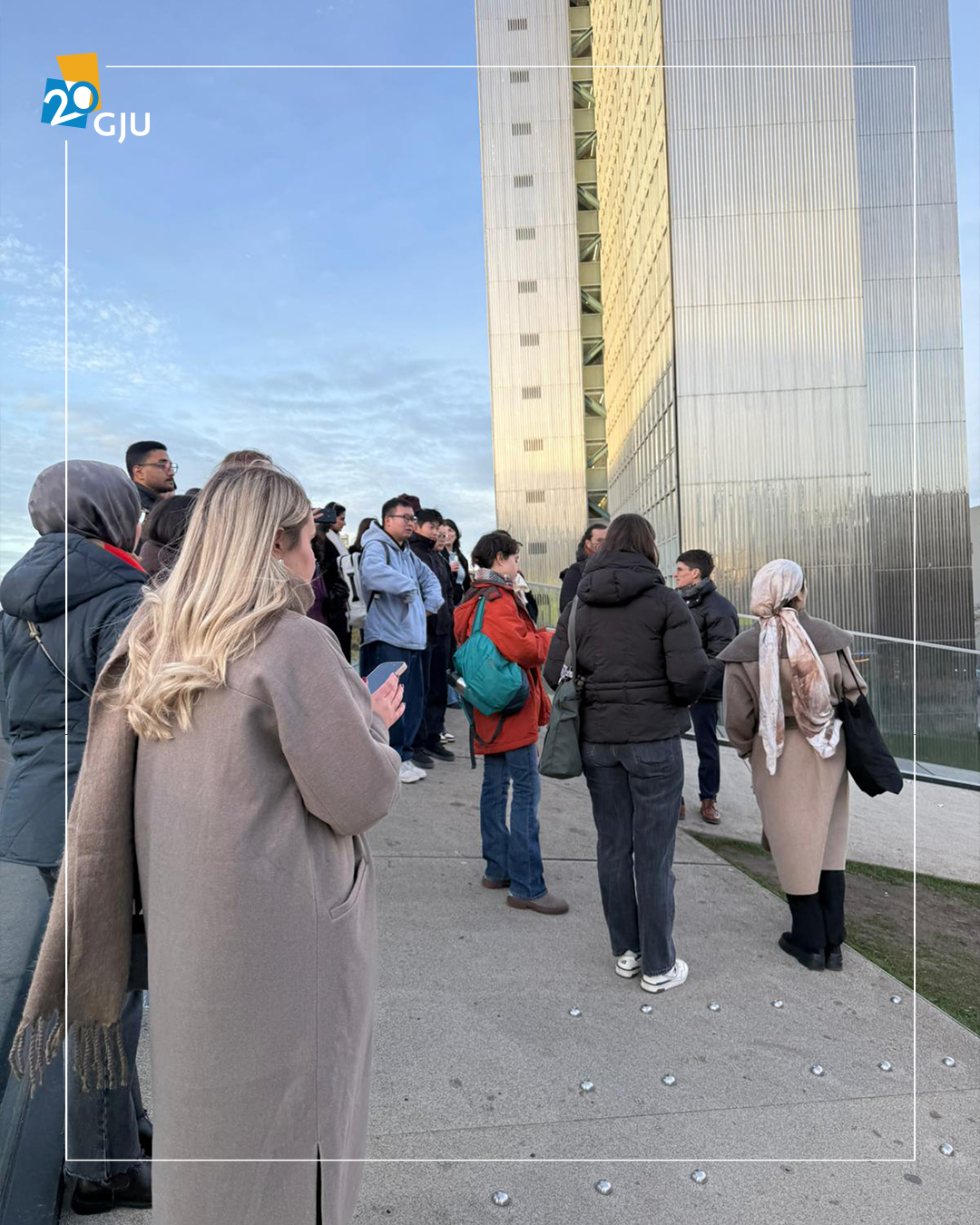
An added dimension to the program was a field visit to Düsseldorf, where students were received by Deputy Mayor Cornelia Zuschke and introduced to the city’s current strategies for mobility transformation, heritage-sensitive planning, and public space enhancement. The visit enabled participants to observe practical applications of the concepts discussed during the workshop and further contextualized the academic themes explored throughout the program.
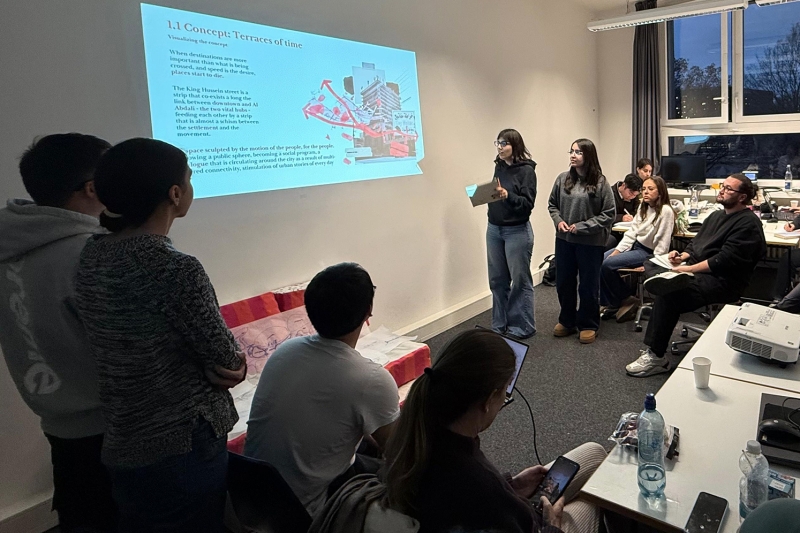
The delegation then continued with intensive studio work at RWTH Aachen’s Schinkelstraße campus, where mixed student teams further developed the work initiated during the Amman workshop. The teams produced strategic masterplans building on their earlier analyses, concluding with group presentations that synthesized both analytical and strategic outcomes. Building on this successful academic exchange, the Ta’ziz partnership is set to expand through planned research collaborations, future symposiums, and enhanced student mobility opportunities between GJU and RWTH Aachen. The project is supported by the German Academic Exchange Service (DAAD), and GJU extends its sincere appreciation to RWTH Aachen University for its generous hospitality and for providing an outstanding academic environment that enriched the educational and cultural experience of the participating students.