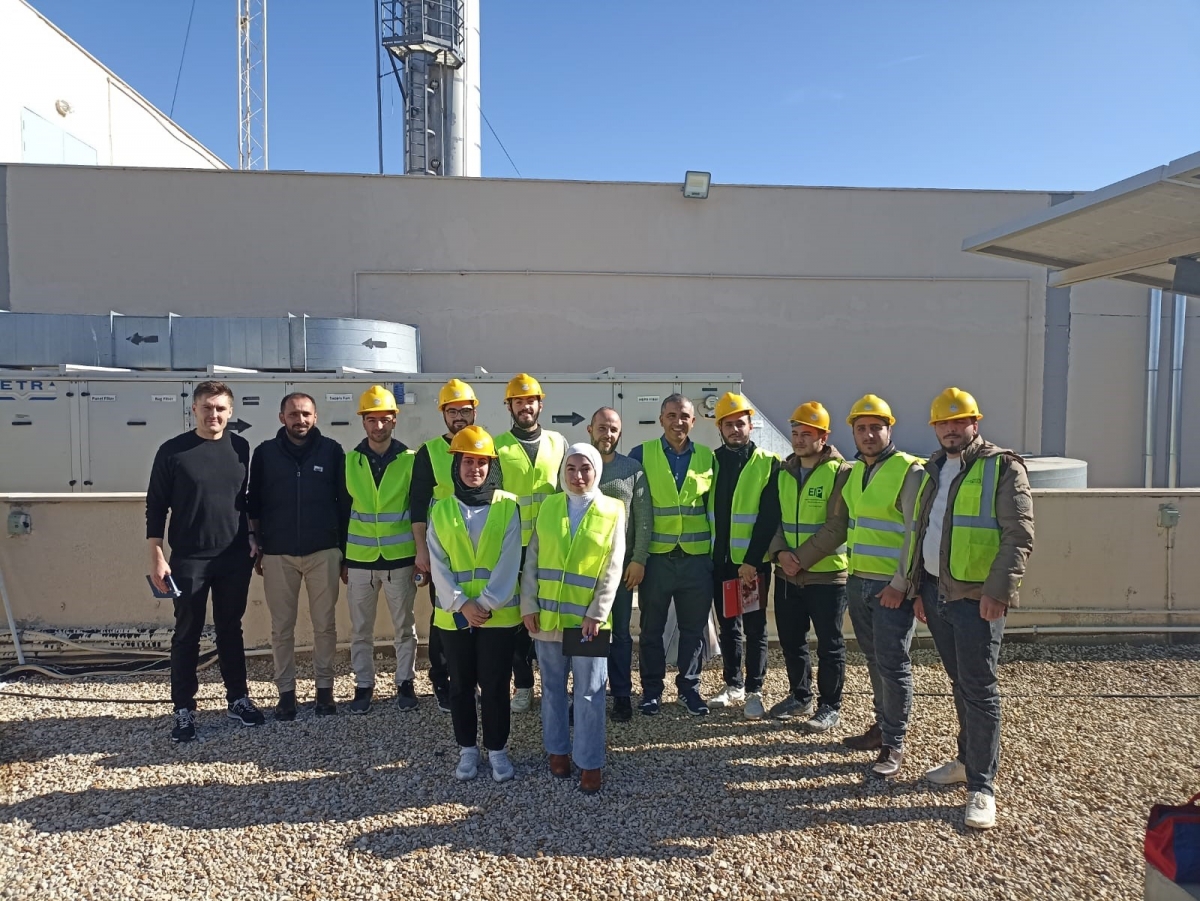

As part of the practical requirements for the energy efficiency training course organized by the German Energy Academy in Jordan at the German Jordanian University, two field visits to the Nutridar factory were arranged due to the high energy consumption and its high costs. They were interested in reducing energy usage without compromising their operations.
GEA’s students conducted an energy audit in the factory's external facilities, which account for 80% of energy consumption from electricity and diesel. They evaluated energy usage, identified potential energy-saving areas, measured the voltage and amperage of machines to determine energy consumption, and identified deficiencies in the machinery.
Furthermore, students conducted a Level 2 energy audit, focusing on Energy Survey and Analysis. They evaluated the consumption of a device responsible for controlling relative humidity in production lines through an air-cooling system (Direct Expansion). They assessed the economic feasibility of replacing it with a water-cooled device (Chiller) and utilizing wasted energy to boost the diesel boiler during peak times or for storing thermal energy. Other air conditioning devices throughout the factory were fully evaluated by monitoring operations to determine standard conditions according to required health specifications. This was done based on data and readings of temperature, humidity, and solar radiation recorded over the past two years, utilizing them to conduct predictive studies on expected daily savings if replacements were made. Additionally, economic calculations were made by connecting students with local experts and leading energy companies.
Dr. Aiman Albatayneh emphasized the importance of linking the industrial sector with local and international experts and companies, noting that this collaboration was facilitated through the Energy Innovation Platform, providing students with real training opportunities and applying theoretical skills in a scientific engineering manner. This engagement in the industrial sector and connecting with leading engineering companies has enhanced students' opportunities in the field of energy efficiency.
Engineer Omar Al-Sotary mentioned that during the visit to the Nutridar factory, students were divided into two groups to facilitate the use of equipment brought to obtain readings and perform necessary calculations. Each student in the group had the opportunity to use the equipment for this purpose. The two groups then prepared a Level 2 energy report according to the adopted specifications.
Nutridar factory is a Jordanian public shareholding company established in 1994. The company produces and markets infant and baby milk, baby food, children's tea, vitamins, and complementary foods for children. Nutridar factory is distinguished by its prominent brand identity, product quality, and services, as well as its renewal and innovation, making it a leading company in the local market and among producers and developers of children's food formulations. Nutridar factory offers its products under different trademarks: "Sahha", "Prima", and "Bebelait".