

Based on the German Jordanian University (GJU) strategy of spreading innovation and creativity among Jordanian university students. GJU is pleased to launch its second version of the innovation competition “GJU 3030” under the “Artificial Intelligence and its Applications” theme that targets Jordanian schools students.
The competition encourages students to submit projects and ideas on the field of AI applications and technologies such as:
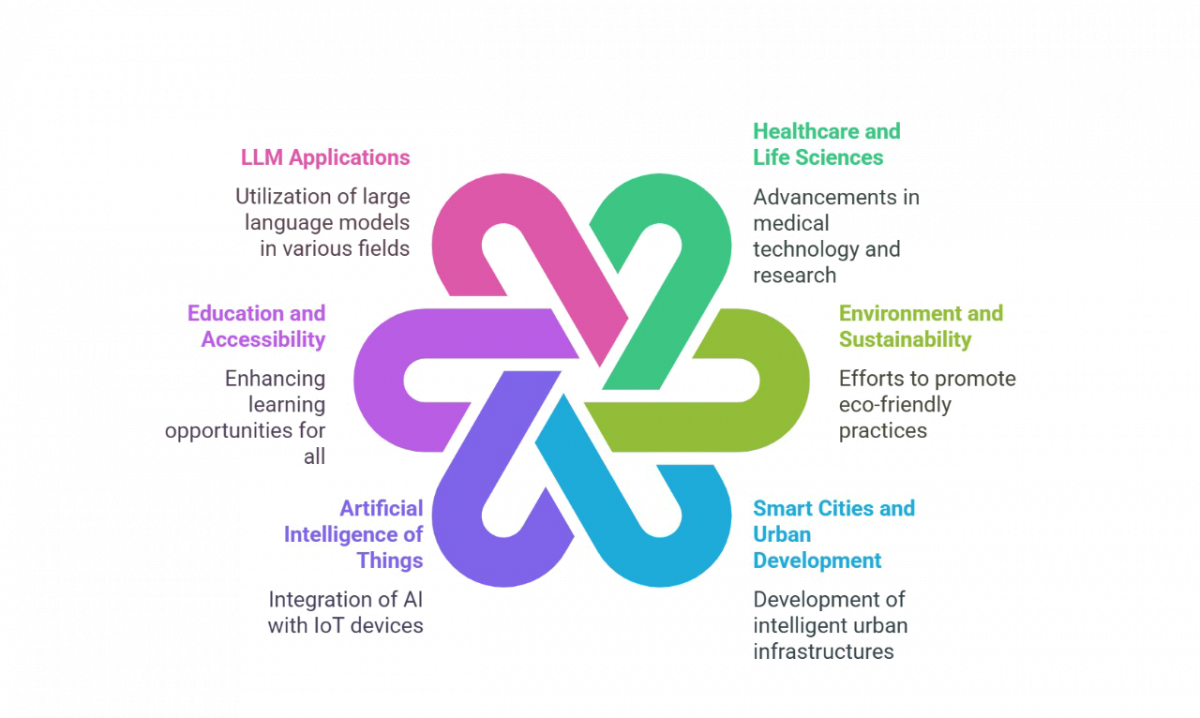
Healthcare and Life Sciences
- AI for Early Disease Detection: Develop algorithms to detect diseases like cancer, diabetes, or Alzheimer's from medical data (e.g., images, genomics, or patient records).
- Mental Health Support: Design AI chatbots or tools for detecting and addressing mental health concerns.
Environment and Sustainability
- Climate Change Modeling: Use AI to predict and mitigate climate change impacts.
- Energy Optimization: Create AI solutions to optimize renewable energy systems or improve energy efficiency.
Smart Cities and Urban Development
- Traffic Flow Optimization: Use AI to reduce congestion and improve traffic management.
- Waste Management: Develop AI systems to sort and recycle waste efficiently.
- Fire detection and prevention: design smart systems to detect and prevent fire.
Artificial Intelligence of Things (AIoT): This topic combines the Internet of Things with Artificial Intelligence.
1. AIoT in Smart Homes and Cities
- Intelligent Energy Management: Develop AIoT systems to optimize energy usage in smart homes and cities, leveraging real-time data.
- Smart Home Automation: Create AIoT solutions that learn user habits to automate home appliances and improve convenience and efficiency.
- Urban Air Quality Monitoring: Build AIoT-enabled networks to monitor and predict air quality in cities for better health and sustainability.
2. Smart Agriculture and Irrigation
- Crop Health Monitoring: Use AI and satellite/drone imagery to identify crop diseases
- Precision Irrigation Systems: Develop AI models to optimize water usage based on weather, soil moisture, and crop needs.
- Crop Yield Prediction: Build AI tools to forecast crop yields based on environmental and historical data.
- Smart Greenhouses: Design AI systems to monitor and control greenhouse environments for optimal plant growth.
- Agricultural Robotics: Create AI-driven robots for automated planting, harvesting, or weeding.
- Market Demand Prediction: Build AI models to help farmers anticipate demand and set pricing for crops.
Education and Accessibility
- Personalized Learning: Build AI tools to create adaptive learning experiences for students.
- AI for Accessibility: Develop AI-driven solutions to assist individuals with disabilities (e.g., text-to-speech for the visually impaired).
- Language Translation: Improve real-time language translation for global accessibility.
LLM Applications
- Personalized Education Assistants: Use LLMs to create adaptive learning tutors for students of various ages and subjects.
- Automated Content Creation: Develop tools to generate high-quality blog posts, articles, or marketing copy tailored to specific audiences.
- Customer Support Automation: Create chatbots powered by LLMs that handle customer queries with human-like understanding and efficiency.
- Code Assistance: Develop LLM-powered tools to help developers write, debug, or optimize code.
- Language Translation and Localization: Improve real-time translations and cultural adaptations using LLMs.
- Virtual Assistants for Accessibility: Create LLMs that assist individuals with disabilities by generating personalized text-to-speech or simplifying complex texts.
- Emotional AI Chatbots: Create empathetic conversational agents that detect and respond to user emotions in a supportive way.
- Scientific Data Analysis: Use LLMs to extract insights and summaries from complex scientific datasets or papers.
Business and Industry
- Predictive Maintenance: Use AI to predict equipment failure in manufacturing or transportation.
- Fraud Detection: Create systems to identify fraudulent transactions in financial services.
- Customer Service Automation: Build intelligent chatbots for customer support.
Creative Robotics and Autonomous Systems
- Disaster Response Robots: Design AI-powered robots to assist in disaster recovery.
- Self-Driving Cars: Create algorithms to improve the safety and efficiency of autonomous vehicles.
- Agricultural Automation: Develop AI solutions for precision farming, pest detection, or crop monitor
Gaming and Entertainment
- AI-Enhanced Game Design: Create AI systems that generate or adapt game levels dynamically.
- Virtual Companions: Develop AI characters that interact realistically with players.
Future Insights and AI
- AI-Driven Predictive Models for Global Trends: Use AI to predict trends in technology, healthcare, or education over the next decade.
- Smart Resource Management: Develop AI systems to forecast and manage global resources like water, energy, and food efficiently.
- Future of Work: Design AI models to analyze how automation and AI will reshape industries, workforce demands, and skillsets.
- AI for Sustainable Development Goals (SDGs): Propose AI solutions to achieve UN SDGs, such as eradicating poverty, promoting clean energy, or ensuring quality education.
- Global Health Forecasting: Build AI tools to predict future health crises, pandemics, or trends in global disease management.
- Futuristic Smart Cities: Develop AI models for designing cities with sustainable infrastructure, energy efficiency, and enhanced living standards.
- AI and Digital Twins: Explore how AI-powered digital twins can model and optimize future industries, cities, or ecosystems.
- Energy Futures with AI: Propose AI-driven strategies for future energy systems, including decentralized grids and renewable energy forecasting.
- AI-Enhanced Creativity: Predict how AI will shape the future of art, music, and culture, focusing on collaboration between human and machine creativity.
- AI-Driven Evolution in Education: Predict how AI will transform global education systems, from personalized learning to AI-generated curricula.
Competition target audience:
How to participate:
- Students should submit their projects using the URL below:
https://forms.office.com/r/n4Nx8xEi3D
- The projects will be reviewed, and the best projects will be shortlisted and invited to showcase their project at the University and present their projects in front of a specialized Judging panel.
- The Judging panel will select the winning teams and award them prizes and trophies and winning certificates.
Benefits of participation:
- An opportunity to present your ideas and projects to a jury and potentially win valuable prizes.
- Get to know other colleagues interested in Artificial Intelligence and exchange experiences and ideas.
- Get the opportunity to work together and develop communication and leadership skills.
- Effective contribution to building a better and more sustainable future for Jordan and the world.
- An opportunity to attend an online training session on emerging technologies such as the Internet of Things, Artificial Intelligence, Innovation and Entrepreneurship, soft skills., etc.
Important dates:
- Project submission deadline [26/4/2025].
- Final project selection selections and notifications [28/4/2025].
- Projects showcasing and final presentation [30/4/2025]
Join us in building a better future! Participate in the German Jordanian University competition and be part of the sustainable solutions that will make a positive difference in our world. Together, we can achieve change for the better!
For more information, you can send an email to Dr. Ala’ Khalifeh, the President Advisor for Campus life (pa.cl@gju.edu.jo).