

Deparment Laboratories
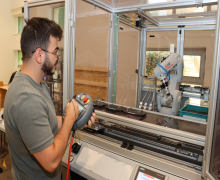
Industry 4.0 Laboratory at the German Jordanian University (GJU) serves as a state-of-the-art learning environment that bridges academic knowledge with real-world industrial practices. The lab is equipped with modern Siemens automation systems, including PLCs, mechatronics trainers, and the

The Microcontroller and Internet of Things (IoT) Laboratory provides an applied framework for understanding embedded system design, digital interfacing, and networked control in mechatronic applications. This laboratory supports the theoretical foundations of microcontroller architecture and

Ofers practical experience with several physical experimental setups designed to teach the principals of automatic control systems, including system modeling, controller simulation, as well as sensor and actuator interface and control via data acquisition systems and interfaces with

The lab assignments will offer students practical experience with several kits designed to teach the principals of Hydraulic and Pneumatic systems. Covered topics include: Pneumatic and hydraulic components: compressor, cooler, compressed-air containers, filters, valves, pumps, piping system
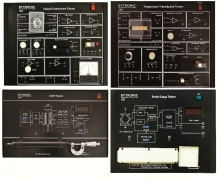
In this lab, students learn how to use various measurement instruments and techniques that are relevant to industry. The experiments include measurements with different micrometers & vernier measuring instruments, angular measurements, roundness & concentricity of cylindrical work pieces
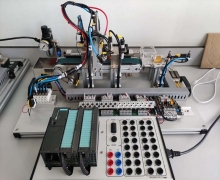
The lab assignments will offer students practical experience with several kits and robots designed to teach the principals of PLC systems. These Kits are programmed using Logo Siemens software, where the student develops and simulates different models and applications used in real life.
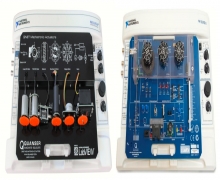
The course provides engineering students with basic understanding of two of the main components of any modern electrical or electromechanical system; sensors as inputs and actuators as outputs. The covered topics include frequency responses and feedback control, Performance specification and
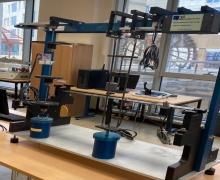
Offers practical experience with several physical experimental setups designed to teach the principals of free vibration of simple mass-spring systems, free damped response of simple mass-spring-damper systems, harmonically excited systems, frequency response of the harmonically excited
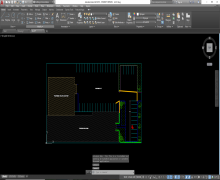
Engineering graphics are a primary medium for communicating design concepts to manufacturers. It defines the geometry, dimensions, and all other information required to produce engineered components. This course aims at developing students' skills needed for documenting designs