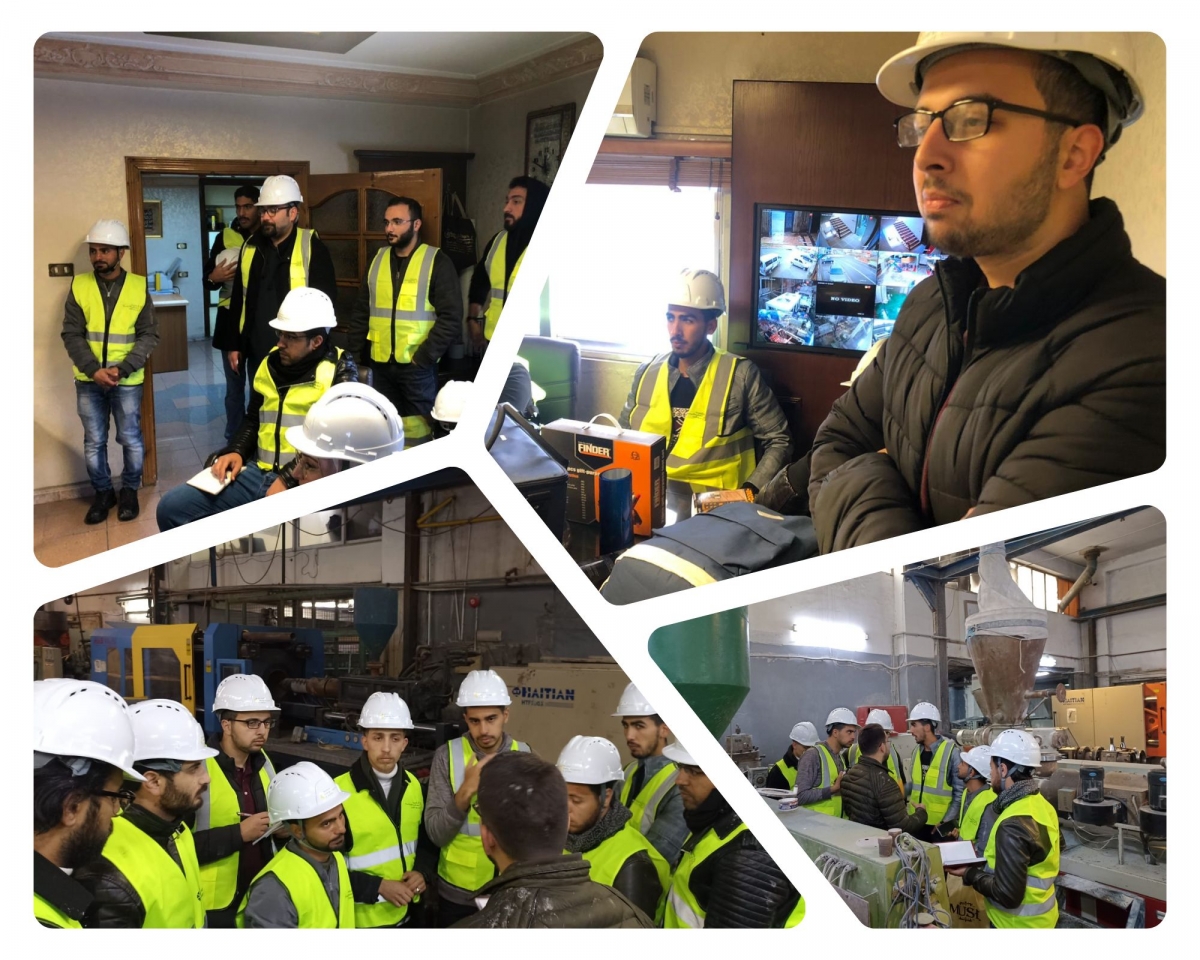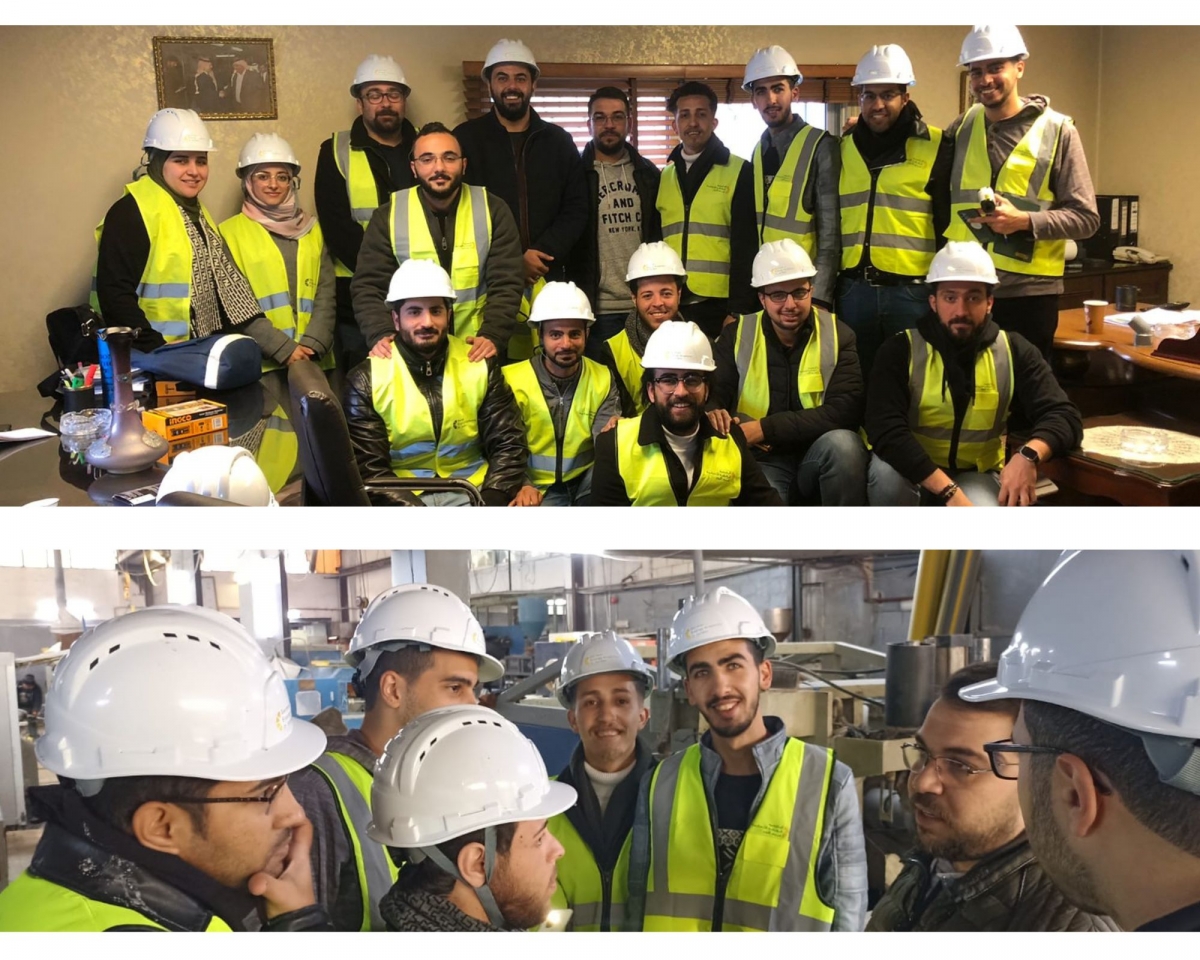

As part of the Energy Efficiency Training course, the German Energy Academy in Jordan at the German Jordanian University (GJU) visited two sites, The Bawaba AlAsreiah for Iron and Engineering Plastic Industrial.
These two factories were selected because they experienced high-energy consumption and incurred significant energy costs. They were interested in finding ways to reduce their energy usage without compromising their operations.
During the visits, the students were able to conduct an energy audit of the facilities, evaluate the energy usage of the factories, identify potential areas for energy savings, measuring the volts and amperes of the machines to determine how much energy was being consumed by the factories and identify any inefficiencies in the machines.
Moreover, they could assess the overall efficiency and effectiveness of the factories' operations. By observing the processes and conditions of the factories, the team was able to identify any bottlenecks or inefficiencies that could be addressed to improve productivity and reduce waste.
In addition, the site visits provided an opportunity to evaluate the safety and compliance of the factories. By assessing the working conditions of the factories and ensuring that they were following all relevant safety regulations, the team helped to ensure the health and well-being of the workers and the surrounding community.
Teacher and Research Assistant, Engineer Omar Alsotary, explained that during the visit to the Iron Factory, the team was split into two groups to facilitate the use of the equipment brought along to obtain readings and perform necessary calculations. Each member of the group had the opportunity to use the equipment for this purpose.
He added that at the Plastic Factory, the team split into groups. Each group is assigned to a particular measurement, line, area, or function. For instance, three groups were assigned to three distinct production lines. Each group was tasked with gaining a comprehensive understanding of their assigned line, including how it operates, the working parameters, and the production rate.
It is worth mentioning that The Bawaba AlAsreiah for Iron specializes in collecting and cutting iron. The factory gathers iron from old or non-functional machines or machines that have been abandoned by their owner. On the other hand, Engineering Plastic Industrial was established in 1993, and since then, E.P.I become one of the largest manufacturers and suppliers of unplaunplasticized sticised Polyvinyl Chloride (U.P.V.C) pipes and fittings in Jordan.
E.P.I. U.P.V.C pipes are manufactured strictly in accordance with the German standards DIN 9061-8062. British standards Bs 3505. Bs 4660. Bs 5481, and according to ISO R 161, Quality Control is of prime importance and is carried out by a well-trained staff in a well-equipped laboratory.
EBI produced U.P.V.C pipes within the diameters range (16-250) mm with different lengths and are used in pressure \ none pressure applications such as transfer water, sewerage, protection electrical and communications wires, and other applications.