
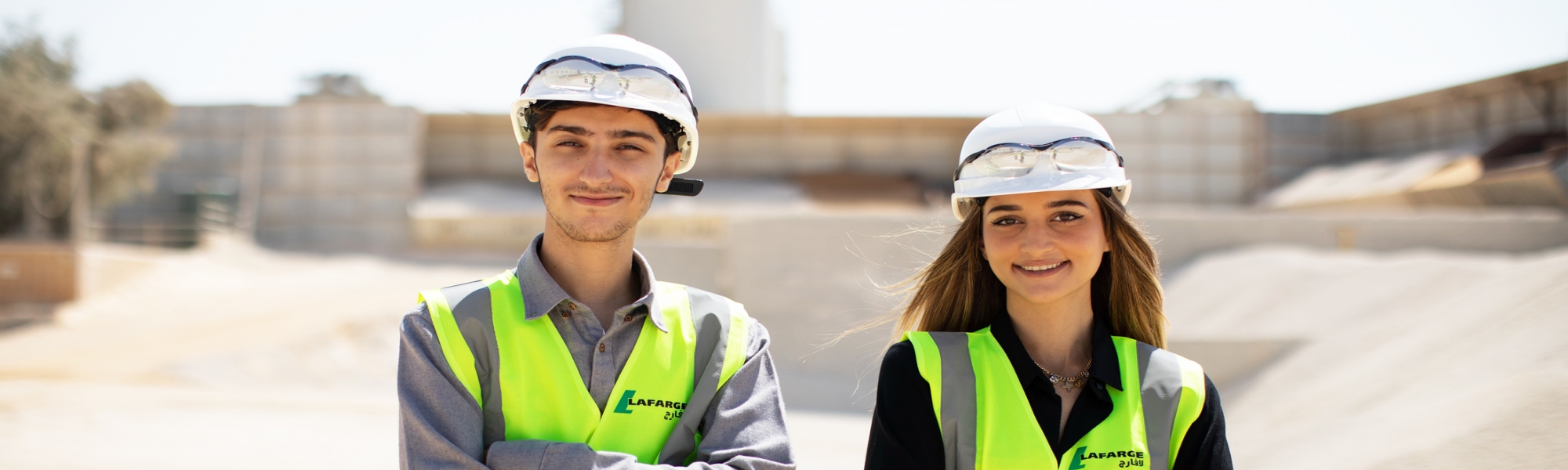
The Dual Studies (DS) Program at the German Jordanian University (GJU) integrates academic
learning with practical, hands-on training at partner companies. Following the German model of
higher education, students split their time between university coursework and company-based
work. This approach ensures that graduates are not only theoretically sound but also professionally
experienced and ready to contribute from day one.
At GJU, the DS Program spans multiple years. Students enroll in practical training courses (DS101,
DS201, DS301) alongside intensive "crash" core courses. The program is jointly managed by the
university's academic schools, DI-TECH (the Dual Studies administration unit), and partner
companies. Students remain enrolled in a regular academic track but are officially transferred to a
Dual Studies track once matched with a company.
The program is governed by a comprehensive set of Standard Operating Procedures (SOPs) covering
recruitment, student-company matching, course delivery, transfers, and dismissals. These SOPs
ensure transparency, fairness, and efficiency for students, partner companies, and the university.
By alternating between classroom theory and real-world application, DS graduates develop strong
technical competencies, problem-solving skills, and professional work habits. They graduate with
up to nine months of relevant industry experience, a professional network, and a proven track record
with a partner company. As a result, DS graduates enjoy significantly higher employability, faster
career progression, and smoother transitions into the labor market compared to traditional
graduates. Employers consistently report lower onboarding costs and higher retention rates when
hiring DS alumni.
The DS Program directly addresses skills gaps in key sectors such as engineering, IT, logistics,
Business Intelligence & Data Analytics and renewable energy. It reduces youth unemployment by
producing job-ready graduates tailored to market needs. For partner companies, the program lowers
recruitment and training costs while increasing productivity and innovation. On a national level, the
DS model strengthens the link between academia and industry, fosters private-sector investment in
human capital, and supports economic diversification and competitiveness key priorities for
Jordan’s knowledge-based economy.
Together, the academic structure, dual studies regulations, and SOP framework form the backbone
of the DS Program, enabling a scalable, quality-assured, and industry-responsive dual education
system at GJU one that benefits students, employers, and the national economy alike.
DI-TECH team,
For more information, have a look at the Dual Studies Brochure.
For more information about Dual Studies in Jordan please refer to: „MY TRAINING… MY CHANCE”